New Construction Homes in Florida | Costs, Builders & Buying Guide

Key Takeaways
- New construction homes in Florida: Include modern hurricane protections that can help lower insurance costs.
- Budget Beyond the Base Price: Upgrades, lot premiums, and finishing touches can add 15%–25% to the final cost.
- Bring Your Own Agent: The builder’s sales team represents the builder, not the buyer, so having your own agent matters.
The Florida housing market moves fast, prompting many buyers to avoid resale bidding wars and look directly at brand-new properties.
According to the National Association of Home Builders (NAHB), construction costs alone account for about 64% of the total price of a new home in the U.S., with the rest coming from land, permits, and other expenses.
At its most basic level, a new construction home is a residential property where you are the first owner and occupant.
New construction homes in Florida typically fall into two categories:
- Spec / Move-In Ready Homes: Already built or near completion with builder-selected finishes and faster move-in timelines.
- Pre-Construction / Semi-Custom Homes: Buyers choose the lot, floor plan, and finishes before construction begins, with timelines usually ranging from 6 to 12 months.
Understanding these distinctions can help you align your home search with your timeline and desired level of customization.
Pros and Cons of Buying New Construction in Florida
Investing in a newly built home offers distinct advantages over older Florida properties, but it also comes with practical compromises that buyers must weigh carefully.
The Advantages:
- Modern Building Codes: Florida updated its building codes significantly to withstand high-wind hurricane events. New construction features advanced tie-down systems, impact-resistant windows or standard shutter packages, and engineered roof trusses that older homes simply lack.
- Lower Insurance & Energy Costs: Because of these safety features, windstorm insurance premiums are often lower for brand-new homes. Additionally, modern insulation, radiant barriers, and high-efficiency HVAC units mean substantially lower monthly electric bills during the hot summer months.
- Builder Warranties: Most new construction comes with a structural warranty (often up to 10 years), mechanical warranties (2 years), and workmanship coverage (1 year), giving you predictable living costs without unexpected repair bills.
The Disadvantages:
- Premium Pricing: On average, new construction carries a higher initial purchase price per square foot than comparable existing homes in the same Florida submarket.
- Evolving Communities: Moving into a brand-new community means living with construction noise, dust, unpaved roads, and ongoing development for months or even years.
- Longer, Unpredictable Timelines: Supply chain issues, weather delays (especially during the summer rainy season), and municipal permitting bottlenecks can push back your closing date unexpectedly.
Are New Construction Homes in Florida Worth It?
New construction is ideal for buyers who value lower maintenance, energy efficiency, and hurricane protection. Existing homes may offer larger lots, mature landscaping, and more central locations at a lower upfront cost.
How Much Does It Cost to Build a House in Florida? (2026 Data)
If you are looking beyond pre-designed community homes and asking how much does it cost to build a house in Florida today, you will find that costs have shifted to reflect updated material, labor, and municipal pricing.
Build Costs by Home Size and Type (Excluding Land)
| Home Size & Type | Suburban Production Build ($150–$180/sq. ft.) | Regional Semi-Custom Build ($180–$250/sq. ft.) | Custom / Coastal Luxury Build ($250–$350+/sq. ft.) |
| 1,500 sq. ft. (Starter / Downsize) | $225,000 – $270,000 | $270,000 – $375,000 | $375,000 – $525,000+ |
| 2,000 sq. ft. (Standard Family) | $300,000 – $360,000 | $360,000 – $500,000 | $500,000 – $700,000+ |
| 2,500+ sq. ft. (Large Estate) | $375,000 – $450,000 | $450,000 – $625,000 | $625,000 – $875,000+ |
Build Costs by Regional Location
| Florida Region | Average Cost Per Square Foot | Typical 2,000 Sq. Ft. Build Total | Local Cost Drivers |
| North Central / Rural (Ocala, Lehigh Acres) | $120 – $150 | $240,000 – $300,000 | More affordable land, lower local impact fees. |
| Suburban / Growth Corridors (Port St. Lucie, Fort Pierce) | $150 – $185 | $300,000 – $370,000 | Balanced labor supply; highly standardized concrete block engineering. |
| Major Metro / Coastal (Miami, Sarasota, Tampa) | $180 – $250+ | $360,000 – $500,000+ | Strict coastal wind codes, high local labor demand, flood zone requirements. |
Hidden Costs to Consider
When budgeting for a ground-up build, the raw construction estimate rarely tells the whole story. You must account for several critical “hidden” line items:
- Impact Fees: Municipalities charge one-time fees on new construction to fund public infrastructure like roads, schools, and parks. In Florida, these range from $5,000 to over $20,000 depending on the county.
- Lot Preparation & Site Costs: Clearing trees, hauling in dirt to meet elevation requirements, soil testing, and connecting to utilities (or installing a septic system and well) add $15,000 to $40,000 before the foundation is poured.
- Finishing Touches: Production estimates rarely include post-construction essentials like window treatments, backyard landscaping, gutters, and screened-in lanais.
Top Florida Home Builders to Consider
The Sunshine State features a mix of massive national production builders and highly reliable regional builders. Choosing the right partner depends on where you want to live and what type of community experience you are looking for.
Regional vs. National Dynamics
National volume builders dominate massive master-planned communities across the state, offering streamlined processes, standardized designs, and competitive pricing. However, buyers looking for a more personalized, hands-on experience often turn to established regional Florida home builders.
On the vibrant Treasure Coast, builders like Renar Homes have spent over 30 years focusing on regional expertise. Renar offers several single-family floor plans ranging from approximately 1,500 to 2,200 square feet, with options designed for families, retirees, and buyers seeking open-concept layouts.
Tips for Researching Builder Reputation
Before signing a contract with any builder, execute thorough due diligence:
- Walk Active Construction Sites: Don’t just look at the pristine model homes. Visit the actual neighborhood where your home will be built. Look at how clean the site is kept and check the quality of materials exposed to the elements.
- Interview Current Residents: Walk the neighborhood on a weekend and speak with homeowners who have lived in the community for six months to a year. Ask about their post-closing warranty experience and how the builder handled punch-list items.
- Verify Licensure and History: Check the Florida Department of Business and Professional Regulation (DBPR) portal to ensure the builder’s license is active and free of major unresolved complaints.
Where Renar Homes Builds in St. Lucie County
If you want to focus your search specifically on the Treasure Coast market, understanding Renar Homes’ current geographic footprint and product offerings clarifies what options are available on the ground.
Geography and Communities
Renar Homes primarily builds in St. Lucie County, serving buyers in Fort Pierce and Port St. Lucie. Their flagship community, Morningside, is a gated neighborhood in northwest St. Lucie County near I-95.
Designed with an “Old Florida” feel, Morningside offers amenities including a clubhouse, fitness center, resort-style pool, playground, sports courts, and walking trails.
Home Types and Specific Models
Renar specializes in concrete block, single-family homes with seven floor plans ranging from 1,560 to 2,215 square feet. Prices for homes in communities like Morningside start in the mid $300,000s.
Renar also offers a “Build on Your Own Lot” program, allowing buyers in St. Lucie County to build their floor plans on privately owned land while Renar manages permitting, site prep, and construction.
How to Compare Renar Homes Against Other Florida Builders
Comparing Renar Homes to national or custom builders mainly comes down to pricing, customization options, and the level of personal service you want.
Standard Features vs. Upgrades
Many national builders keep base prices low by charging extra for upgrades like quartz countertops, wood cabinetry, and stainless-steel appliances. Renar includes many of these finishes as standard features, which can make pricing more transparent.
Flexibility
National production builders typically limit structural changes to their floor plans. Renar offers more flexibility for adjustments like layout modifications or expanded spaces, especially for buyers using the “Build on Your Own Lot” program.
Customer Service
Large builders often manage communication through online portals and sales teams, while regional builders like Renar provide more direct access to project managers and local construction staff throughout the build process.
The Buying and Building Process with Renar Homes
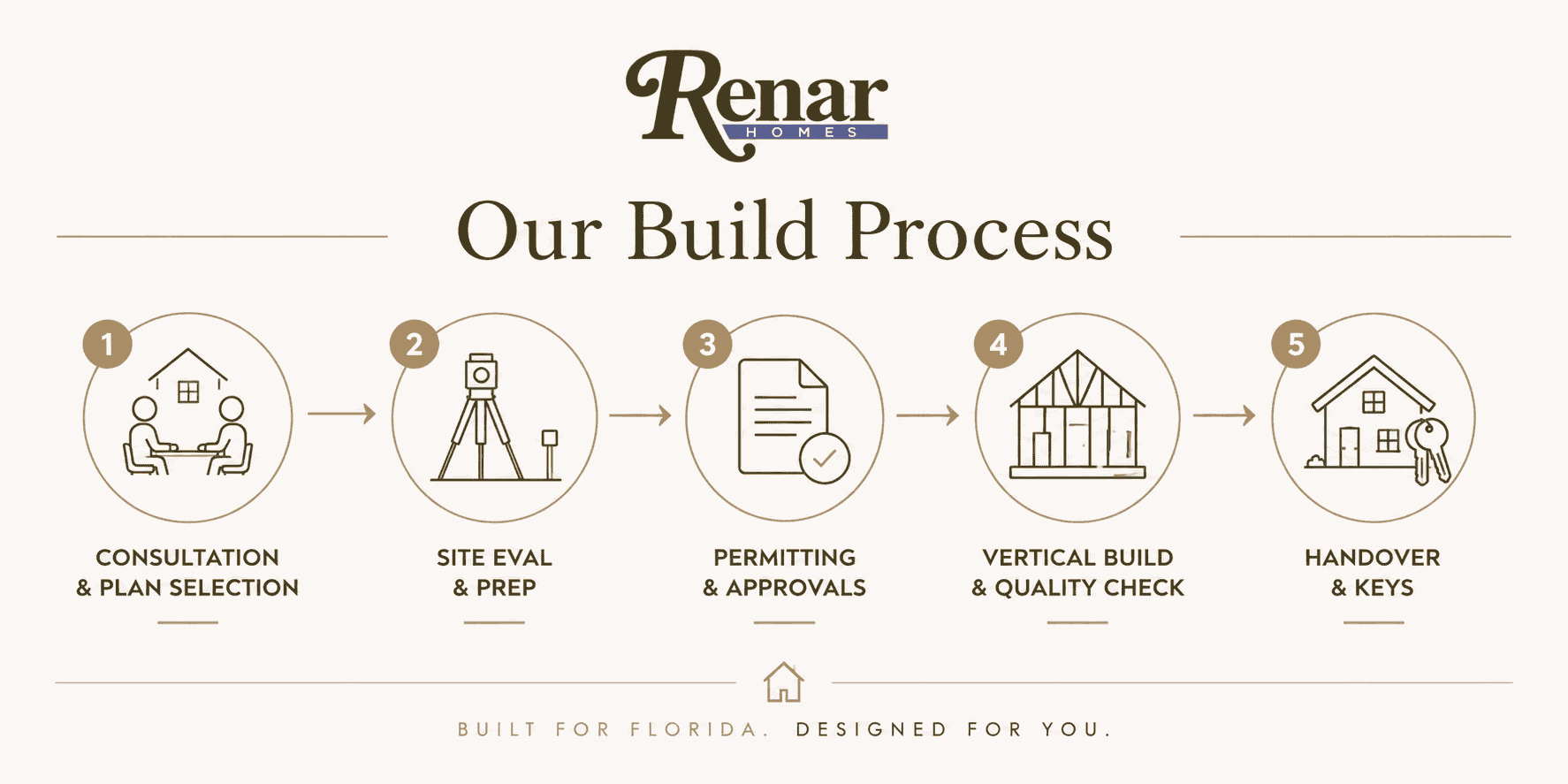
Building a home with Renar follows a structured process designed to take a buyer from initial financing through final walk-throughs without communication gaps.
Step 1: Consultation & Site Evaluation
Buyers review pricing, available floor plans, and lot options. For “Build on Your Own Lot” projects, Renar evaluates the land, utilities, and site conditions before construction begins.
Step 2: Floor Plan & Design Selection
Choose a floor plan, structural options, and interior finishes before signing a fixed-price contract and submitting a deposit.
Step 3: Permitting & Sitework
Renar manages local permits, engineering reviews, lot preparation, utility installation, and foundation work.
Step 4: Construction & Inspections
Crews complete the concrete block structure, roofing, plumbing, electrical, and HVAC installation while coordinating required inspections throughout the build.
Step 5: Final Walkthrough & Closing
After finishes and landscaping are completed, buyers complete a final walkthrough, address any remaining punch-list items, and close once the home receives its Certificate of Occupancy.
Custom Home Builders in Florida: What to Expect
When working with specialized custom home builders in Florida, you are building a one-of-a-kind home tailored to your exact specifications. This is fundamentally different from a production build.
The Custom Journey
The custom home process is highly personalized, allowing buyers to work with architects and designers to customize layouts, finishes, and home placement. Because of the added design and construction complexity, custom builds typically take 12 to 18+ months to complete.
Steps to Buying a New Construction Home in Florida
Navigating a new construction purchase requires a different chronological framework than a traditional resale transaction.
1. Secure Financing & Establish Budget: Before Site Visits.
Determine whether you will use a builder’s preferred lender or secure an independent construction loan. Obtain a formal pre-approval letter before setting foot in a sales center.
2. Select Builder, Lot, and Floor Plan: Month 1.
Tour model homes, evaluate neighborhood site maps, and select the specific lot and structural floor plan that fits your lifestyle.
3. Contract Execution & Design Center Updates: Month 2.
Sign the purchase agreement and make your earnest money deposit. Meet with design consultants to finalize your interior finishes, cabinetry, flooring, and electrical upgrades.
4. Permitting & Site Preparation: Months 3-4.
The builder submits architectural plans to the local Florida municipality for building permits. Once approved, the site is cleared, graded, and the concrete slab foundation is poured.
5. Framing, Mechanicals, & Drywall: Months 5-7.
The structural walls (often concrete block in Florida) and roof trusses go up. Plumbers, electricians, and HVAC technicians run their rough-in lines before drywall seals the walls.
6. Finishes, Inspections, & Closing: Months 8-10.
Flooring, trim, cabinetry, and landscaping are installed. You will complete a pre-closing walkthrough (the “punch list”) with the builder, pass municipal final inspections, and sign your closing documents.
Timeline from Start to Finish
Most production homes in Florida take about 8 to 10 months to complete, but weather can impact the timeline. Builds often move faster during the dry winter months, while the rainy hurricane season can cause construction and inspection delays.
Financing Options for New Construction Homes
Financing a home that doesn’t exist yet requires specialized loan structures. You cannot use a standard conventional purchase mortgage until the home has received its Certificate of Occupancy (CO).
Primary Loan Pathways
- Construction-to-Permanent Loans: Commonly used for custom builds on your own land. This loan closes before construction starts. It funds the build in stages as milestones are met.
During construction, you pay interest only on the amount drawn. Once the home is finished, the balance automatically converts into a standard 30-year fixed mortgage.
- End Loans: Most common with production and semi-custom community builders. The builder finances the actual construction out of their own pocket.
You put down a deposit upfront, and your traditional mortgage doesn’t fund until the home is fully complete and ready for move-in.
Builder Financing Incentives
Many builders offer incentives through preferred lenders, including closing cost credits, lower interest rates, or upgrade allowances. However, buyers should still compare offers with independent lenders to ensure they’re getting the best long-term loan terms.
Common Mistakes to Avoid When Building or Buying
Because buying new construction feels clean and straightforward, buyers frequently let their guard down and fall into preventable financial and logistical traps.
Major Pitfalls
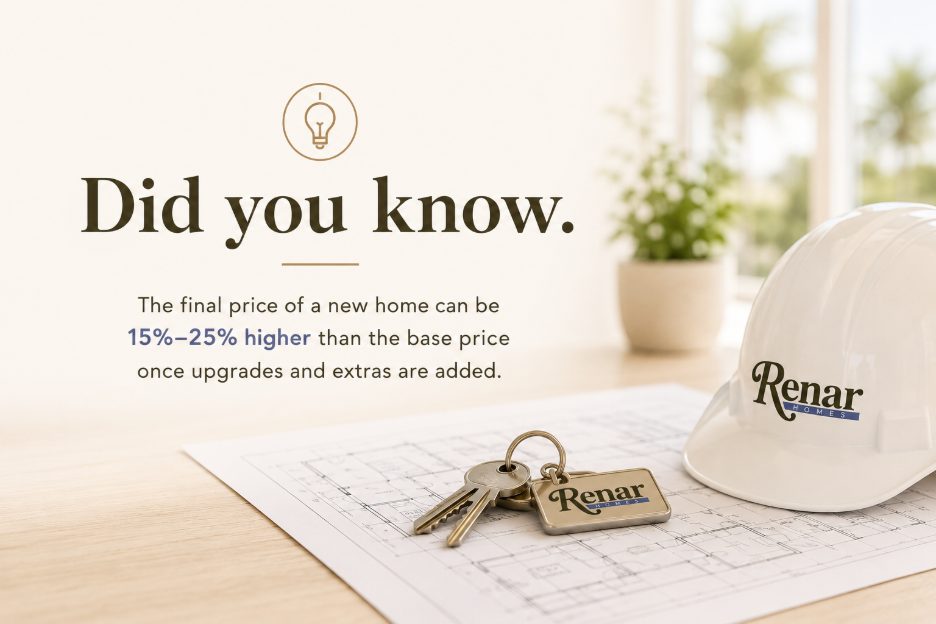
- Underestimating the Total Cost: The base price advertised on a billboard or website is rarely what you pay. Once you add lot premiums (cul-de-sac, lakefront, or corner lots), design center upgrades, and post-closing items, the final price tag can easily sit 15% to 25% higher than the base price.
- Skipping Independent Home Inspections: Never assume a home is flawless just because it is brand new. Subcontractors work quickly, and mistakes happen. Hire an independent licensed home inspector to review the property at three critical stages: right before the slab is poured, right before drywall goes up (pre-drywall inspection), and right before your final closing walkthrough.
- Signing Unfavorable Contracts: Builder contracts are heavily protective of the builder, not the buyer. They typically contain clauses allowing them to substitute materials of equal quality, extend completion dates without penalty, and retain your deposit if you back out.
Actionable Advice
Bring your own licensed real estate agent to your very first visit to a model home. The helpful sales agent inside the model home works exclusively for the builder and represents the builder’s financial interests.
Having an independent agent ensures you have an advocate negotiating structural credits, review periods, and contract contingencies on your behalf, at zero out-of-pocket cost to you.
Frequently Asked Questions About New Construction Homes In Florida
Builders rarely lower base prices, but buyers can often negotiate upgrades, closing cost credits, or design incentives instead.
Most new homes include a 1-year workmanship warranty, 2-year mechanical coverage, and 10-year structural warranty.
Most builders include standard kitchen appliances and basic landscaping, while items like refrigerators, washers, dryers, and fences are often sold separately.
A pre-drywall inspection takes place before drywall installation, allowing inspectors to review framing, wiring, plumbing, and structural components before they are covered.
In terms of new construction homes in Florida, Renar Homes builds single-family homes in Fort Pierce and Port St. Lucie, with homes in communities like Morningside starting in the mid-$300,000s.